I loved playing football. I loved coaching football. I love watching football.
One of the attractors to the game for me is the continual re-setting and re-launching process. In very short bursts the two teams review what just happened, re-strategize, reset themselves, and re-launch.
Almost always the re-launching occurs when the quarterback loudly marks the beginning of the next play with a guttural exclamation that sounds like...
"10-25-Hut-Hut"
or
"Blue-17-Hit-Hit"
or
"Deleware-33-Deleware-33-Fire"
or somesuch.
Whatever shape it takes, it means GO!!!!!
Both teams then enthusiastically deploy their very best individual and collective efforts toward the accomplishment of their goals. After a lot of crashing, banging, sprinting, blocking, tackling, feigning, tossing, passing, catching, etc., that play quickly ends and the process starts all over again.
44-Hut-Hut: Today marks the day that Moe (my lovely bride of 43 years) and I celebrate the completion of our 43rd re-launch and mark the beginning of #44. After another very quick year ends, a new round of crashing, banging, sprinting, building, growing, working, buying, eating, traveling, crying, hugging..............LOVING begins.
I absolutely love being on her team.
About Me
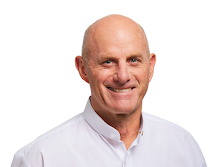
- nelsonwcoulter
- Welcome to nc’s blog. Read, comment, interact, engage. Let’s learn together - recursively.
Thursday, February 27, 2020

Thursday, February 20, 2020
EnergyDance
Energy required!
Energy is required for progress, for success, for life. It doesn't matter whether we're talking about the energy produced by the mitochondria in each cell of our body (which keeps us running) or the energy produced by a team of folks accomplishing great things (whether athletes pursuing a title or researchers seeking breakthrough solutions).
Like so many other things in life, energy can run both ways.
The Neg: Sometimes energy is sucked out of the room/organization/body as result of diversions, delays, ignorance, inattention, jealousy, hyper-caution, selfish ambition, fear.
The Pos: Good energy is generated by noble pursuits, worthy goals, risk tolerance, encouragement, support, self- and team-actualization, HEALTH.
The best leaders I know are adept in doing a tricky energy dance. They identify and mitigate the energy sucks and the energy diverters. At the same time, these wise leaders free and protect components/folks/systems that are creating positive energy toward valued goals.
I think I hear the band tuning up...
Friday, February 14, 2020
LearningWork
WORK!
Most all of us work, in some form or fashion. Even those who are not officially "employed" engage in work, somehow.
The best leaders I know understand that work is the result of LEARNING. They also know that better work is the result of better learning.
The best leaders I know are constantly LEARNING, for themselves. They mine deeply from books, from articles, from videos, from podcasts, from conferences, from others in their field, from folks in non-related fields, from asking questions, from observation, from ... The possibilities are endless, and their learning is relentless and intentional.
The best leaders I know are fully aware that the success of their organization (whatever its mission) is directly proportional to the amount and quality of the learning that goes on within the membership of the organization.
The best leaders I know intentionally and with great discipline schedule LEARNING into the workdays/workweeks/workyears of their organizational membership, top to bottom.
Survival in a competitive marketplace is most certainly one of the drivers behind those decisions. Prospering in that marketplace is an even more powerful objective.
The late Stephen Covey was fond of asking this question: "Did you ever get so busy driving that you didn't have time to stop and buy gas?" Point well made.
LEARN ON!
Thursday, February 6, 2020
AlienatedAmerica
I recently
read Alienated
America: Why Some Places Thrive While Others Collapse by Timothy Carney
(2019).

In this
book, TC dissects voting trends in both the primary and general elections
of 2016 to try to make sense of why large collections of American voters felt/feel
disenfranchised. TC not only carefully
disaggregated the numbers via statistical analysis, he also followed up with
qualitative interviews/observations to delve more deeply into the causes and
effects of political, social, and economic disparity.
Some of my
biggest takeaways:
Ø Ease of mobility in America has had
the effect of creating pockets of self-segregated “elites” (affluent and/or
educated) from the “non-elites,” resulting in the polarization of worldviews.
Those are not “merely differences of income, wealth, or education; they are
differences of health, hope, and opportunity.” (p. 62)
Ø When people are afflicted with
“idleness” – nothing to do – traditional social institutions begin to collapse.
Ø To truly understand others we must
engage them where they are – in their
communities. Simply crunching data sets
does not effectively tell the whole story.
Ø Trust is a requirement of healthy
community; it allows us to lower our defense shields.
Ø The dissolution of family and houses
of faith are at the root of America’s social and economic problems.
Ø Loss of civility is directly
proportional to the collapse of traditional social institutions (e.g., family,
church, book clubs, bowling leagues, service organizations, etc.)
Ø Secularization is the effort to force
religion into being solely a private experience, depriving it of the
self-actualizing effects of service for the greater good of the community.
Ø A continuum: Total regulation & low trust <---> Low regulation &
high trust. (Community health is low on
the left end and high on the right end.)
Ø Family strength is a powerful
predictor of the potential for upward mobility for children.
My favorite
quotes:
“Strong
communities function not only as safety nets and sources of knowledge and
wisdom, but also as the grounds on which people can exercise their social and
political muscles. These are where we find our purpose.” (p. 12)
“Bad
economics can help kill a community, but good economics cannot, alone, rebuild
one. And if you’re not building community, you’re not getting close to fixing
what ails us.” (p. 282)
A very
insightful examination of our national “health.” Thanks for the recommendation, TM.
Saturday, January 18, 2020
UndoIt!
I recently read Undo It! How Simple Lifestyle Changes
Can Reverse Most Chronic Diseases by Dean and Anne Ornish (2019).

Few
researchers on the topic of nutrition are better known or more respected than Dr. Dean Ornish. In this book, he and his
wife, Anne, make a compelling and comprehensive argument that, with rare
exceptions, our health and wellbeing (physical, mental, emotional-spiritual) is
in OUR OWN hands and can be adeptly optimized through the lifestyle choices we
make.
The four
Ornish health pillars: eat well, move
more, stress less, love more. In this
book, DO/AO provide concrete strategies and advice for accomplishing all four.
Some of my
biggest takeaways:
> In the
U.S., 5% of the patients account for 50-80% of all healthcare costs.
> Our
health is a holistic construct, and can only be optimized through a holistic
approach.
> The
Ornishes advocate for a whole-food, plant-based diet.
> Us
humans are really mostly microbes, having over 100 trillion non-human organisms growing inside our bodies.
> Over
50% of the current U.S. population either has Type 2 diabetes or are
pre-diabetic.
My favorite
quotes:
“By
analogy, if you have a rock in your shoe, don’t blame the stone, use
painkillers or surgery to cut the affected nerves, or wear thicker socks — just
take out the rock!.” (p. 19)
When diet
is wrong, medicine is of no use. When diet is correct, medicine is of no need.
—Ayurvedic proverb
“…our
natural state is to be in a state of ease; when we disturb this, we become
dis-eased.” (p. 243)
If you care
about your own health, and that of your family and employees, this book is a
most worthy read.
Sunday, January 12, 2020
WarOfTheWorldviews
I recently read War of the Worldviews: Where Science and Spirituality Meet -- and Do Not by Deepak Chopra and Leonard Mlodinow (2012).
Chopra is a well known author (though trained as a physician) and Mlodinow is an American physicist.

In this book DC and LM alternatively take turns addressing some very deep and interesting questions.
Those questions were:
How did the universe emerge? Is the universe conscious? Is the universe evolving? What is the nature of time? Is the universe alive? What is life? Is there design in the universe? What makes us human? How do genes work? Did Darwin go wrong? What is the connection between mind and brain? Does the brain dictate behavior? Is the brain like a computer? Is the universe thinking through us? Is God an illusion? What is the future of belief?
As the title indicates, DC and LM hold very differing perspectives on these deep questions, Chopra arguing for the spiritual underpinnings, Mlodinow for the purely scientific explanations.
I tend naturally to lean toward the spiritual side of that continuum, yet have come to believe that the fundamentalists who cling to the extreme ends necessarily must dismiss some pretty compelling evidence in support of the other perspective.
I thoroughly enjoyed the book. If you choose to read (or listen) to it, expect your assumptions to be challenged, regardless of what you think you believe.
Wednesday, January 1, 2020
Covenential
Standing at the threshold of a new year and a new decade, I can't help but reflect a bit.
The journey thus far has most assuredly been a blessed one -- with health, with family, with a loving partner, with support networks (both personal and professional), with enough. To be sure, there have been a few hiccups in the road, a few fractured relationships, a few decisions that seemed NOT to have "panned out" (to channel Rooster Cogburn).
Nonetheless, looking forward at this moment in the journey, I consider anew the things most in need of my attention. After all, as I heard Amy Grant say in a recent concert, "I can see the finish line from here."
Focal points for my attention and effort:
- Relationships First - with the God of my understanding, with family, with my many valued friends and colleagues.
- Stewardship - thoughtfully care for that over which I have been given responsibility (e.g., health and wellbeing, relationships, natural/material resources).
- Service - emulate, as best I can, the Christ model of serving others (LOVE being always the motivating catalyst).
- Learning - accelerate my learning across multiple fronts and share it with others. When we stop learning, we start dying.
Not really resolutions. Perhaps commitments. No, Covenants seems a better word...
Subscribe to:
Posts (Atom)