Information flows, whether we want it to or not. Always has, always will. Even the most oppressive and restrictive governments on Earth know, without doubt, that they cannot control the flow of information.
Information can run through a myriad of conduits: carrier pigeons, ambassadors, smoke signals, Pony Express riders, telegraph, lanterned night-riders, phones, television, advance scouts, telepathy, social media - the list goes on without end. In today's environment that information flows almost instantly, and it gets ricocheted through other portals without end.
While we can't control what others say/think about us, we can control what we communicate about ourselves. The only question is, what message(s) do we want to send? We have the power to frame the opinions and impressions of others, but we must be intentional in the process.
What signals are we sending? Are they the ones we want sent?
About Me
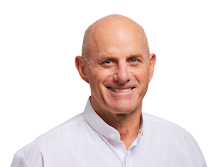
- nelsonwcoulter
- Welcome to nc’s blog. Read, comment, interact, engage. Let’s learn together - recursively.
Monday, March 28, 2016

Saturday, March 26, 2016
FearFactor
The Fight-or-Flight (4F) Response is widely accepted and taught in the field of psychology. It posits that humans respond to fear/threat in one of four ways:
- Fight - aggressively resist the threat, by violence or other means.
- Flight - flee the threat as quickly as possible.
- Freeze - shut down emotionally, intellectually, and/or physically in the presence of the threat.
- Fawn - quickly acquiesce to the needs/wishes/purposes of the threat.
When we fear for our physical safety, the fight or the flight responses seem most often the ones to kick into gear. However, when the threats to us are political/social/emotional in nature, it seems our natural response is too often to freeze or fawn.
The prospect of change often represents a threat to us and makes us fearful. Thus, we respond in one of the 4F responses noted above. We are wise, however, to discipline ourselves to face change primarily with the fight response (but not necessarily with violence). We can and should "fight" intellectually and strategically, by seeking to understand the threat, by discerning what adaptions we should/must make in order to counter the threat, by learning how we can leverage/assimilate the threat to make us better and stronger.
Threats, interestingly, can be the trigger to our self-betterment. The real danger is not the prospect of change (it is, after all, life's most intractable constant); rather, the danger is in our failure to adapt to change effectively.
Fear not.
Thursday, March 24, 2016
Persnickety
We all know people who major in the minors. They critique, dissect, cajole, nitpick anything and everything. We also know those people as persistent pains and energy drains. It's even worse when they're in charge.
None of us want to be known as one of those persnickety types (not even those who are the persnickety types want to be known as such).
So, when is the right time for fastidiousness?
We should notice, acknowledge, and address issues under the following circumstances:
None of us want to be known as one of those persnickety types (not even those who are the persnickety types want to be known as such).
So, when is the right time for fastidiousness?
We should notice, acknowledge, and address issues under the following circumstances:
- When mistakes become persistent trends.
- When the variance in performance impacts our reputation and/or quality.
- When we clearly have folks in the wrong roles.
- When the heartburn is being caused by ethical deficits.
- When those who are responsible are ducking the responsibility.
- When a team member is unable and/or unwilling to get better.
We should be persnickety only when it really counts (and leave the small stuff alone). If we're persnickety about everything and everybody, it'll be a long and lonely life.
Tuesday, March 22, 2016
Manufacturing
A common conceptualization of us humans is that we have four dimensions: mind, body, emotion/heart, and spirit.
Our best selves are manifested when we employ all four dimensions into our endeavors. It is from such integrated and holistic enrollment that we experience wholeness and self-actualization.
However, it is often the case that we bring only two of those dimensions to our workplace: mind and body. When we do that we have robbed ourselves and our vocation/profession of the very drivers of creativity, innovation, and service - the emotion/heart and the spirit.
When we invest only our mind (i.e., knowledge) and our body (i.e., physical structure) into our work, we allow ourselves to become little more than automatons or machines. In essence, we simply function as robots, in the business of "manufacturing."
We can do, and be, so much more.
Our best selves are manifested when we employ all four dimensions into our endeavors. It is from such integrated and holistic enrollment that we experience wholeness and self-actualization.
However, it is often the case that we bring only two of those dimensions to our workplace: mind and body. When we do that we have robbed ourselves and our vocation/profession of the very drivers of creativity, innovation, and service - the emotion/heart and the spirit.
When we invest only our mind (i.e., knowledge) and our body (i.e., physical structure) into our work, we allow ourselves to become little more than automatons or machines. In essence, we simply function as robots, in the business of "manufacturing."
We can do, and be, so much more.
Friday, March 18, 2016
Status
If we're measuring ourselves against others, then status must matter. If status matters to us, then we'll never be fully happy, nor will we ever be fully ourselves. There will always be some other(s) who are smarter, faster, richer, prettier, more clever, funnier, more famous, etc.
When living with purpose is more important to us than achieving status, then we are freer (and more apt) to:
If we're truly interested in being our fullest selves, then status shouldn't matter.
When living with purpose is more important to us than achieving status, then we are freer (and more apt) to:
- Love others more authentically.
- Serve others with fidelity.
- Premise our decisions and actions on principles instead of outcomes.
- Focus on the spiritual more than the material.
- Live more simply.
- Listen more and talk less.
- Seek inner peace.
If we're truly interested in being our fullest selves, then status shouldn't matter.
Wednesday, March 16, 2016
ShortMenu,UglyOptions
The first and most profound lessons folks learn as they move into leadership positions are the constraints of decision-making. Monday morning quarterbacks are quite fond of second guessing leaders on the difficult decisions they (must) make. That second guessing is almost always accompanied by the preface of, "Well, if it were me, I would..."
The reality is this: The decisions that most often present themselves to those in leadership positions are the difficult, ambiguous, and complex ones. Other folks in the organization readily make the decisions that are easy and low-risk. The tough decisions, the politically risky ones, the ones that have the look/smell/feel of dilemma, most often get "kicked up the food chain."
Thus, when it's time to make those tough decisions, the menu of remaining options is almost always short and almost always ugly. The higher up the leadership food chain you get, the shorter and uglier the options become.
Welcome to leadership.
The reality is this: The decisions that most often present themselves to those in leadership positions are the difficult, ambiguous, and complex ones. Other folks in the organization readily make the decisions that are easy and low-risk. The tough decisions, the politically risky ones, the ones that have the look/smell/feel of dilemma, most often get "kicked up the food chain."
Thus, when it's time to make those tough decisions, the menu of remaining options is almost always short and almost always ugly. The higher up the leadership food chain you get, the shorter and uglier the options become.
Welcome to leadership.
Sunday, March 13, 2016
FoodSanity(18.0)
I've heard the argument that it really doesn't matter what you eat as long as it's filling. Really? If that were the case, then by far the best and cheapest route would be to shred some pasteboard, sprinkle it with some salt and sugar, then eat to our heart's content. BUT WAIT! Much of our processed food is little more than that. We would never fuel our car with water and expect it to run well; since our bodies are much more complex organisms than a car we can't it expect to fuel them with food void of nutrition and achieve optimal performance.
What our bodies need is nutrition, not volume. Nutrient dense food is a little harder to find, but well worth the search, and the price. Why? It's what our bodies want and need. My physician, Dr. Ben Edwards, calls it "God Food." Many authors in the health debate/literature are now calling it "real food."
So, what is real food? It's food that is in the form closest to what it looked like when harvested. It's food that is raised with zero or minimal chemical inputs (e.g., pesticides, herbicides, fungicides, antibiotics, hormones, etc.). It's food that hasn't been sliced, diced, mushed, crushed, frozen, boxed, waxed, and/or colored. It's food that has been raised in healthy, living, vibrant soil.
Moreover, we're learning now that we should probably consume about half of that real food in raw form, if we're seeking maximum nutrition. Real, nutrient-dense food is pretty much all we need to live long and healthy lives.
Come on in, the water's fine...
What our bodies need is nutrition, not volume. Nutrient dense food is a little harder to find, but well worth the search, and the price. Why? It's what our bodies want and need. My physician, Dr. Ben Edwards, calls it "God Food." Many authors in the health debate/literature are now calling it "real food."
So, what is real food? It's food that is in the form closest to what it looked like when harvested. It's food that is raised with zero or minimal chemical inputs (e.g., pesticides, herbicides, fungicides, antibiotics, hormones, etc.). It's food that hasn't been sliced, diced, mushed, crushed, frozen, boxed, waxed, and/or colored. It's food that has been raised in healthy, living, vibrant soil.
Moreover, we're learning now that we should probably consume about half of that real food in raw form, if we're seeking maximum nutrition. Real, nutrient-dense food is pretty much all we need to live long and healthy lives.
Come on in, the water's fine...
Subscribe to:
Posts (Atom)